Tequila's story stretches from pre-Hispanic agave traditions to a globally recognized spirit. It is a history of indigenous knowledge, colonial distillation, industrial growth, and a modern revival that returned the focus to the agave itself. Here is a concise account of how we got here.
Before Tequila: Pulque and Agave Traditions
Long before distillation reached Mexico, the peoples of Mesoamerica had a deep relationship with agave. They roasted the piñas for food and fermented the sap of certain agave species to make pulque — a thick, milky, mildly alcoholic drink that predates tequila by centuries. Pulque was sacred to cultures including the Aztecs and remained a common drink in central Mexico long after the arrival of the Spanish.
These traditions established the agave as a plant of central cultural importance. Distillation, when it arrived, would build on a foundation that already existed.
The Arrival of Distillation
Distillation came to Mexico with the Spanish in the sixteenth century. Cut off from their usual supply of brandy and spirits from Europe, the Spanish turned to the local agave, applying their distillation techniques to the cooked piñas. The result was the first agave spirits — early ancestors of what would become mezcal and tequila. Over time, production centered on the region around the town of Tequila in Jalisco.
The Town of Tequila and Early Growth
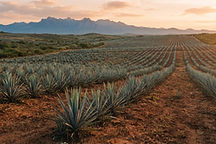
By the seventeenth and eighteenth centuries, agave spirits were being produced commercially around the town of Tequila, helped by the region's abundant blue agave and its proximity to Guadalajara. The Cuervo family began distilling in the area in the eighteenth century, and other early producers followed. The spirit took the town's name, and a recognizable industry began to take shape.
Industrialization and the Nineteenth Century
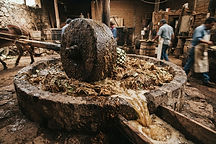
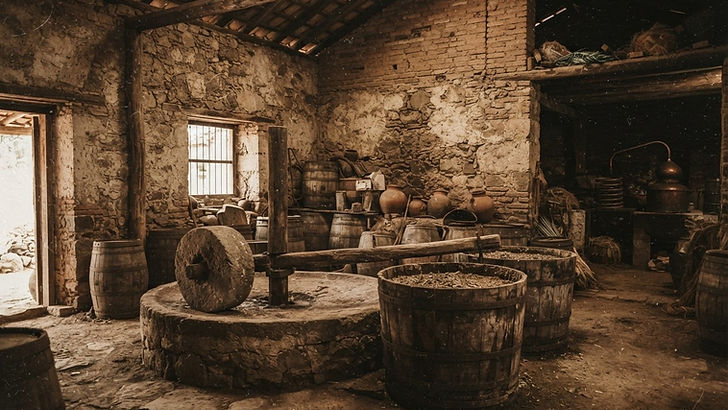
The nineteenth century brought railroads and industrial equipment that expanded tequila's reach beyond its home region. Producers adopted steam-powered mills and other machinery, and tequila began to travel throughout Mexico. The spirit's identity was further shaped as production methods standardized and the market grew.
The Twentieth Century and Regulation
As tequila's reputation and market grew, so did the need to protect its name. The mid-twentieth century saw the beginnings of formal regulation, and in 1974 the denomination of origin for tequila was officially established, defining the regions where the spirit could be legally produced. The "100% de agave" standard and the modern aging categories followed, giving the label the structure it has today. Read about that structure in our guide to 100% agave tequila.
The Mixto Era
For much of the twentieth century, much of the tequila exported abroad was mixto — tequila cut with other sugars, often bottled abroad and marketed primarily for shots and margaritas. This era shaped tequila's international reputation, for better and for worse, and obscured the spirit's character behind the salt-and-lime ritual.
The 100% Agave Revival
In recent decades, a revival has reshaped tequila. Consumers and producers turned back toward 100% agave expressions, traditional methods, and the spirit's agricultural roots. Small and independent producers gained attention for their craft, and the conversation around tequila shifted from "how to drink it fast" to "how to appreciate it slowly." See our guide to tasting tequila.
A Global Spirit
Today tequila is a global spirit, protected by law, made under regulation, and appreciated far beyond Mexico. Yet for all its international reach, it remains an agricultural product rooted in a specific plant — blue Weber agave — and a specific place. The history of tequila is, in the end, the story of how a local tradition became a worldwide one without losing its origin.
From fermented pulque to a global spirit, tequila's history is the history of a single plant and the people who learned to make the most of it.